


Assessing reliability and identifying the limits oh H2 components
In hydrogen systems, component reliability is a key issue. Valves, sensors, relief valves, fittings and tubing can be subjected to significant thermal and vibration stresses during operation.
How can their limits be identified, their weak points highlighted, and their design margins better assessed?
H2PULSE and SERMA Technologies combine their expertise to offer HALT robustness testing on hydrogen-fed components.
The objective is to provide manufacturers with concrete data to identify weaknesses in their equipment, secure their design choices and improve the robustness of their hydrogen solutions.
Putting components to the test to identify their limits
HALT – Highly Accelerated Life Testing is a test methodology designed to characterize the robustness of a product by subjecting it to progressively increasing stresses.
The objective is to identify failure modes, highlight weak points and determine operating and design margins based on experimental data.
Applied to hydrogen equipment, this approach makes it possible to test components under conditions combining temperature, vibration and H₂ supply, in order to gain a better understanding of their behaviour in demanding environments.
HALT equipment adapted to hydrogen testing
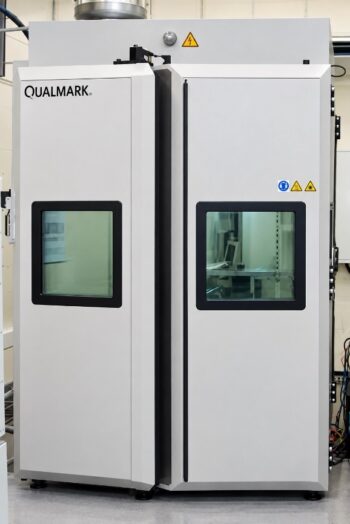
Test campaigns are carried out in Bordeaux using a Qualmark Typhoon 4+ chamber, capable of combining significant thermal and vibration stresses while the component remains operational under hydrogen supply:
- Temperatures from -100°C to +210°C, with transients up to +250°C;
- Temperature change rates of up to ±60°C/min;
- Pseudo-random vibration on 6 degrees of freedom, up to 50 Grms, over a frequency range from 10 Hz to 10 kHz;
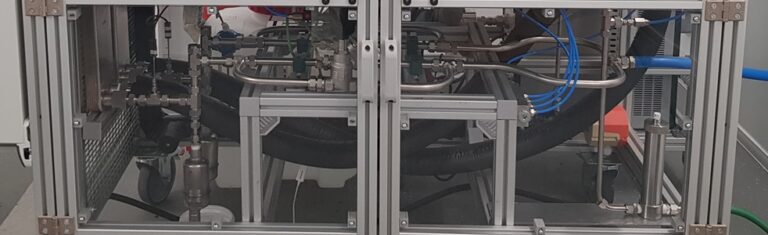
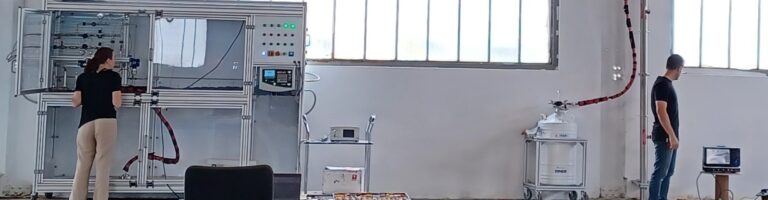
- A hydrogen supply network available directly inside the chamber, with pressure and flow rate adapted to the test requirements;
- Nitrogen inerting of the chamber.
This configuration makes it possible to expose equipment to different stresses while maintaining the hydrogen supply throughout the tests.
A test campaign tailored to the component under evaluation
A typical HALT campaign can be carried out over 5 days, including test setup, pre-testing and the test campaign itself.
Various types of equipment can be assessed: valves and solenoid valves, sensors, actuators, safety devices and relief valves, fittings/seals and tubing, as well as other components integrated into hydrogen systems.
The test protocol is defined according to the component, its actual operating conditions and the objectives of the test campaign.
Would you like to characterize the robustness of a hydrogen-fed component or develop a test campaign tailored to your requirements? The H2PULSE teams are available to discuss your project.
© H2Pulse – SERMA 2026